Society
At a glance
Seoul announced a target in August to introduce 500 autonomous buses by 2030.
On October 1, the city, Hyundai Motor and the bus operators’ association signed a three-year pact assigning roles in policy, vehicle development and operating preparations.
The new dedicated buses are to undergo development and trials in 2027–2028, with full-scale introduction pursued from 2029; the pact does not launch driverless regular bus service immediately.
From a 500-bus target to execution roles
On October 1, Seoul signed an agreement with Hyundai Motor and the Seoul Bus Transport Business Association to commercialize Level 4 autonomous city buses.
The agreement runs for three years from signing.
The partners will prepare vehicle development and operations together to expand trials on selected routes into the regular city bus system.
The figure of 500 buses is not a new target.
On August 21, Seoul had already announced expansion to 500 buses by 2030 and large-scale introduction from 2029.
That plan outlined prototype production in 2026–2027 and trials in 2028.
The latest announcement assigns specific roles to the three partners for development and trials in 2027–2028.
The two documents alone do not establish whether the schedule has been delayed.
City policy, Hyundai vehicles, industry operations
Seoul will develop policies for trials and regular operations and prepare a transition linked to replacement of aging buses.
It will discuss regulatory changes needed for commercialization with the transport ministry and other agencies.
Hyundai will support development, production, supply and maintenance of an 11-meter dedicated bus designed to accommodate autonomous driving technology.
The association will help operators secure test drivers, control personnel, depots and charging facilities, and contribute to control and operating plans.
Hyundai and Kia will also develop a platform for real-time operations and emergency monitoring.
Sensor configurations and installation standards will be aligned to collect data, with sharing for technology development planned within legal limits.
When can passengers ride the new dedicated buses?
The first stage is vehicle and technology development and passenger service trials in 2027–2028.
Rides during this period would be trial services.
The announcement does not finalize when or on which routes all residents could use them.
Commercialization procedures, including vehicle performance certification, are also planned.
The next stage is to build out deployment and operating arrangements from 2029.
The target is a total of 500 buses by 2030, linked to replacement of aging buses.
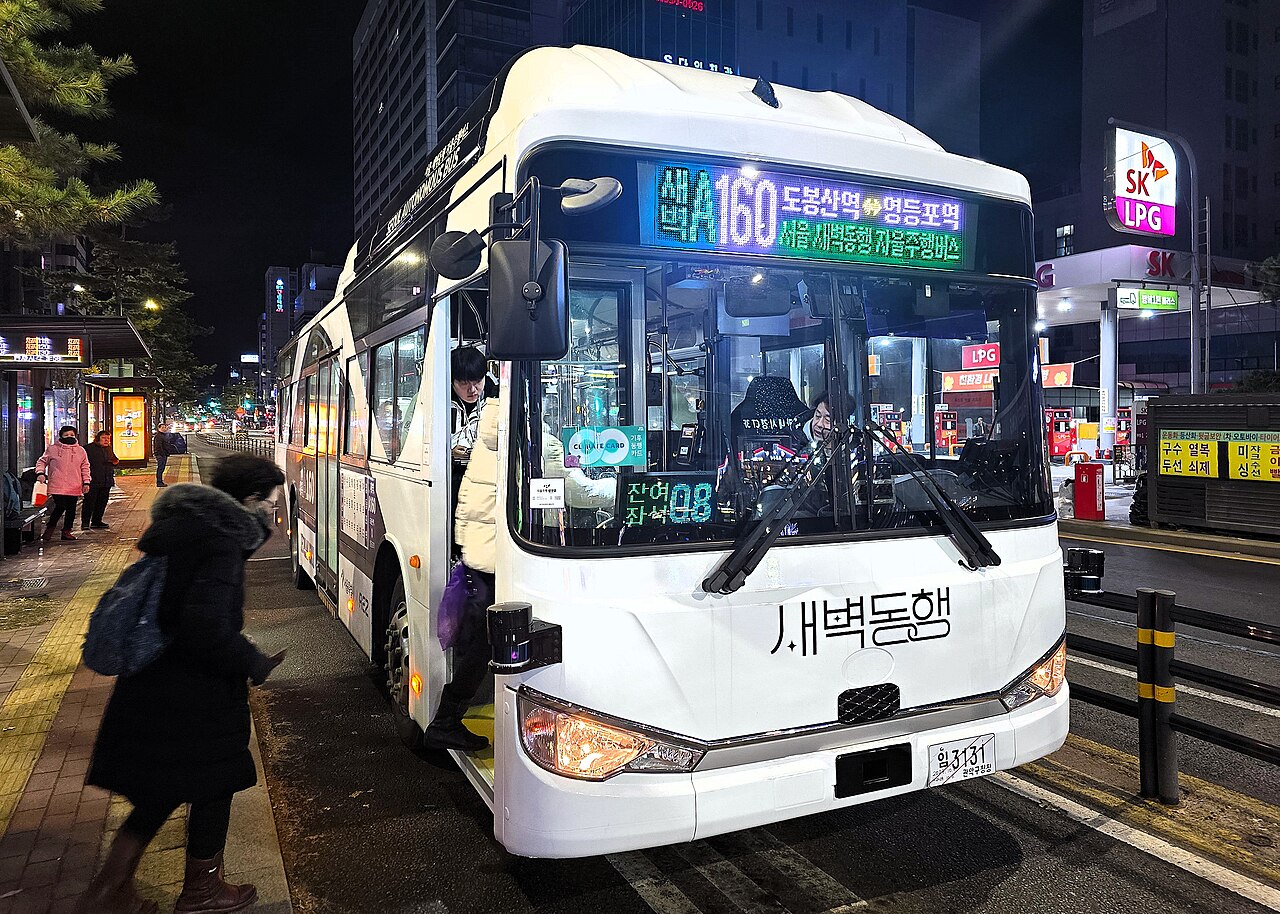
Existing early-morning autonomous bus services should be distinguished from the large-scale introduction of new dedicated vehicles.
Signing the agreement does not mean regular service by the new vehicles has begun.
Level 4 still depends on operating conditions and safety checks
Level 4 means driving without human intervention within specified operating areas and conditions.
It does not mean unrestricted autonomous driving on every road and in every kind of weather.
The dedicated buses are planned to include redundant critical components and cybersecurity measures, with performance and operating safety checked at each deployment stage.
Routes, fares, detailed safety operating conditions and final operating approvals for the large-scale rollout are not presented as finalized in these documents.
The years 2029 and 2030 are implementation targets subject to safety verification and regulatory procedures, not service-opening notices guaranteeing rides on a particular date.
Sources and references
Official and primary materials
- 서울특별시 · 서울시, 2030년까지 자율주행 시내버스 500대 도입 추진
- 서울특별시 · 서울시, 자율주행버스 500대로 늘리고 사각지대 없는 교통망 구축...글로벌 TOP3 대중교통 혁신
- 현대자동차그룹 · 현대차·기아, 서울시 자율주행 시내버스 산업 생태계 구축 나선다